
SAPLAST · Certificates
Insulating glass
The energy savings you achieve

Key characteristics
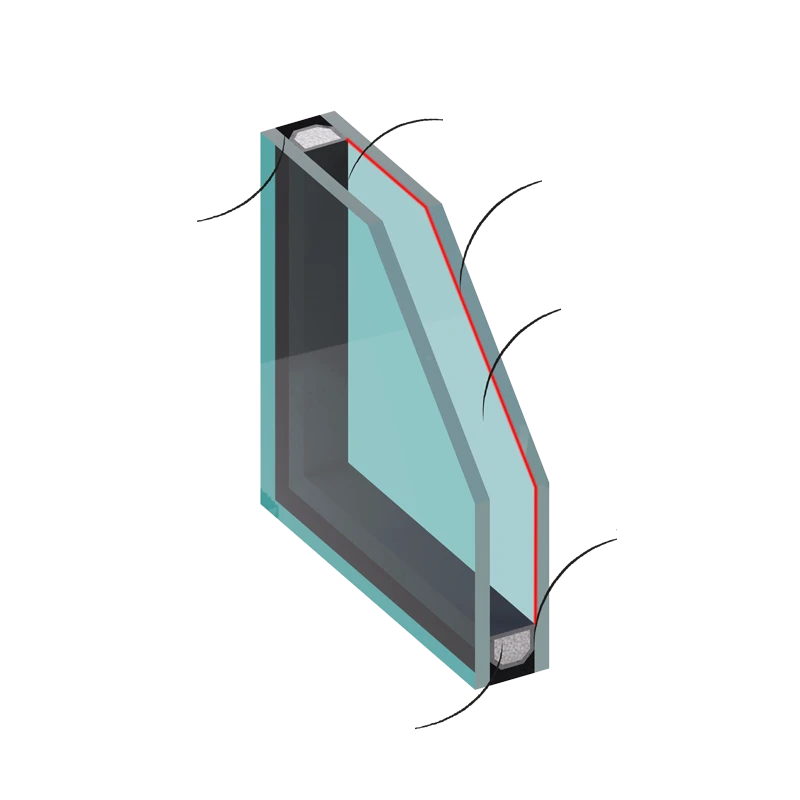
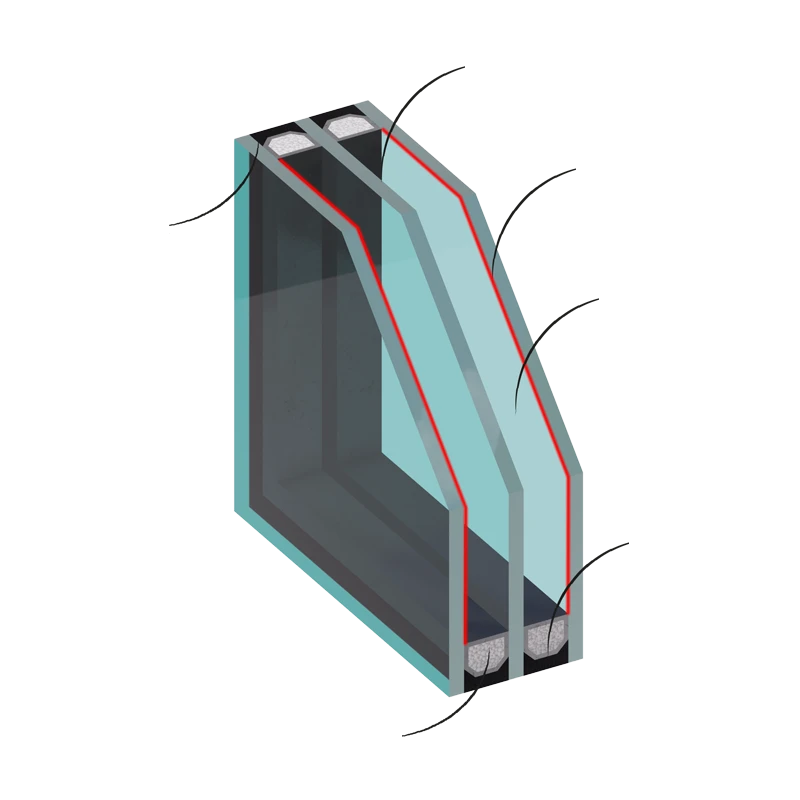
Thermal insulating glass, also known as insulating glass, is a composite product consisting of two or more glass panes with a hermetically sealed space between them filled with dry air or gas.The main purpose of insulating glass is to improve the thermal efficiency of windows and doors by reducing heat loss and preventing moisture condensation on the inner glass surfaces. This glass helps keep indoor spaces warmer in winter and cooler in summer, reducing the need for heating or cooling and lowering energy costs.
Insulating glass can have different characteristics, such as different glass thicknesses or sealing materials, and can be filled with inert gas, most commonly argon, for additional thermal insulation. Coatings can also be applied to improve energy efficiency, reduce light reflection or control solar energy.
Advantages of insulating glass:
Thermal insulation: Insulating glass reduces heat loss through windows, helping maintain a comfortable indoor temperature and reducing the need for heating or cooling.
Lower energy costs: Thanks to better thermal insulation, insulating glass can help reduce heating and cooling costs, resulting in savings on energy bills.
Reduced condensation: Quality insulating glass reduces moisture condensation on the inner window surfaces, helping keep interiors dry and preventing mould.
Noise reduction: Insulating glass can reduce the penetration of outside noise, providing a quieter and more peaceful interior.
Aesthetic appearance: It is available in various colours, decorative patterns and finishes, allowing window and facade designs to be adapted to different architectural styles and preferences.
Improved security: Some types of insulating glass can provide additional protection against burglary and impact, making windows more resistant to damage.
Environmental benefits: The improved energy efficiency of insulating glass helps reduce greenhouse gas emissions and conserve natural resources.
Double glazing
Triple glazing
Planitherm One T
Superior-performance “single-stock” low-E glass with an optimal centre-pane U-value of 1,0 W/m²K
Description
PLANITERM ONE T is manufactured on a magnetron coater. A unique combination of metal oxide layers is applied to high-quality PLANICLEAR clear float glass using a magnetically enhanced cathodic sputtering process under vacuum conditions.
Advantages
Improved thermal insulation
– with an optimal centre-pane U-value of 1,0W/m²K (16mm, cavity filled with 90% argon), SGG PLANITHERM ONE T can comfortably meet current building regulations by improving the whole-window U-value for all frame types
– particularly suitable for new residential buildings and light commercial applications in new construction and renovation using steel and aluminium frames
– significantly reduced heating compared with standard glass
– an environmentally friendly solution, given the lower CO2 emissions associated with reduced energy consumption
Improved thermal insulation
– helps eliminate cold areas around windows, resulting in greater comfort
– reduces condensation on the inner pane
– neutral appearance in both transmission and reflection
– maximises natural daylight entry
– maximises the use of living and working space
Range
Monolithic glass: Standard thickness: 4mm and 6mm.
Other thicknesses are available on request.
Toughened glass: SGG PLANITHERM ONE T is a “single-stock” coating and can therefore be used in annealed or toughened form. It can be toughened to meet the safety requirements of BS EN 12150.
Laminated glass: SGG STADIP,SGG STADIP PROTECT and SGG STADIP SILENCE laminated glass
– contact us for delivery times and availability.
Technical specifications
| Double glazing DGU | Triple glazing TGU | |
|---|---|---|
| Inner pane | PLANITERM ONE T | PLANITERM ONE T |
| Outer pane | PLANICLEAR | PLANICLEAR |
| Composition in mm | 4 (16) 4 | 4 (16) 4 (16) 4 |
| Coating position | Face 3 | Faces 3 and 5 |
| Light transmission TL | 67% | 51% |
| Light reflection, external RLe | 25% | 35% |
| Light reflection, internal RLi | 25% | 35% |
| Solar factor, g-value | 0,49% | 0,37% |
| Shading coefficient | 0,57% | 0,43% |
| U-value W/(m²K)* Argon | 1,0 | 0,5 |
Planitherm One T meets the Class C durability requirements of European standard EN 1096. Light and solar performance comply with EN 410. Performance data were calculated using Calumen III 1.25 and are accurate at the time of publication (26.1.2023.), but are subject to change at any time.* Centre-pane U-values are rounded in accordance with EN 673.
